Which Canadian M&A Firms Use AI to Match Sellers with Buyers
Several Canadian firms use workflow AI, but true algorithmic buyer-matching remains scarce.
What AI buyer-matching means, and what it does not
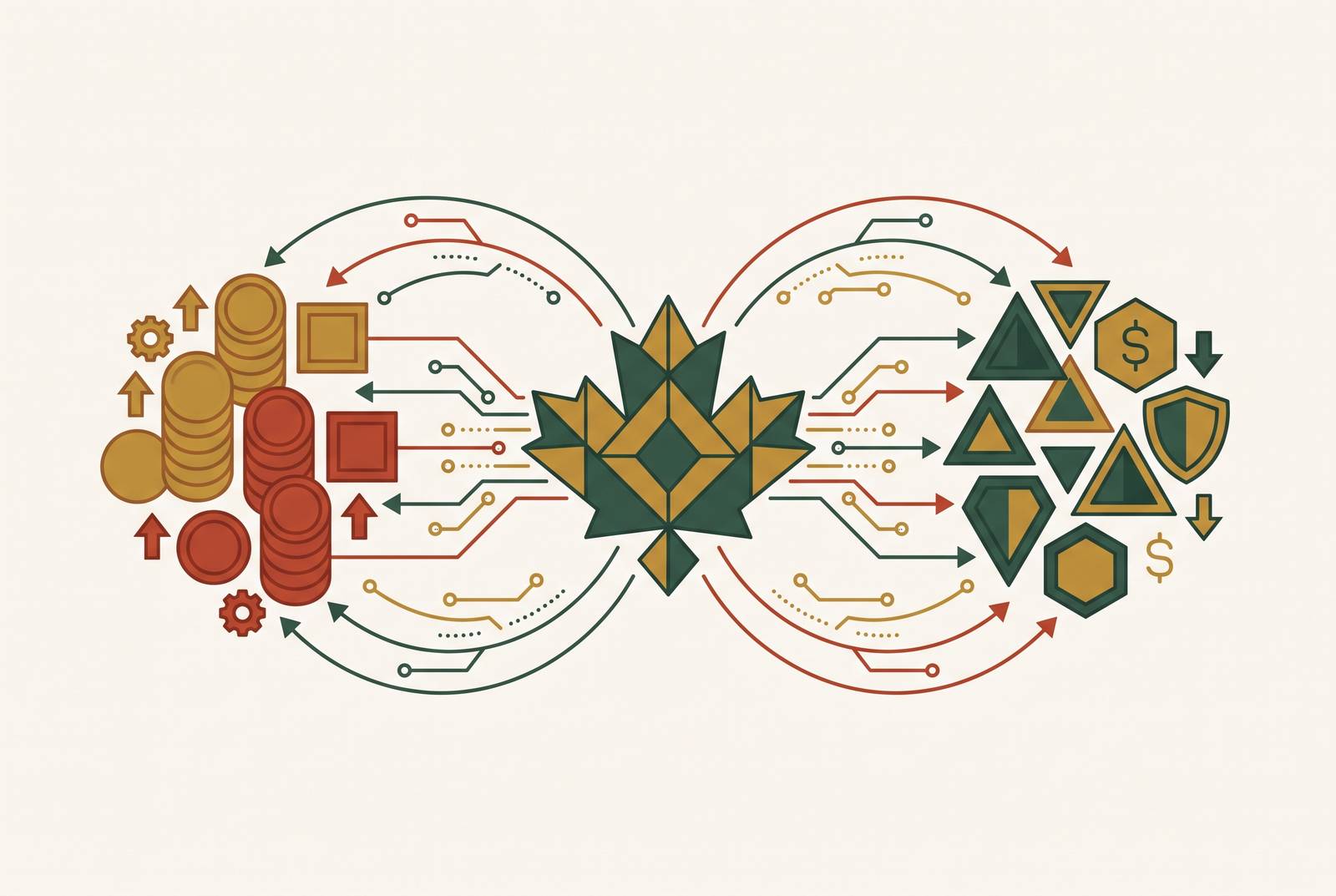
When the marketing language is stripped away, what's left is a fairly specific mechanism. AI buyer-matching means an algorithm reads through large volumes of data, financial filings, hiring trends, patent filings, web traffic, past transaction records, even social sentiment, to flag companies whose acquisition criteria line up with a specific seller. That difference means a seller reaches buyers identified through data analysis rather than relying on a broker's contact book or a chance introduction at a conference.
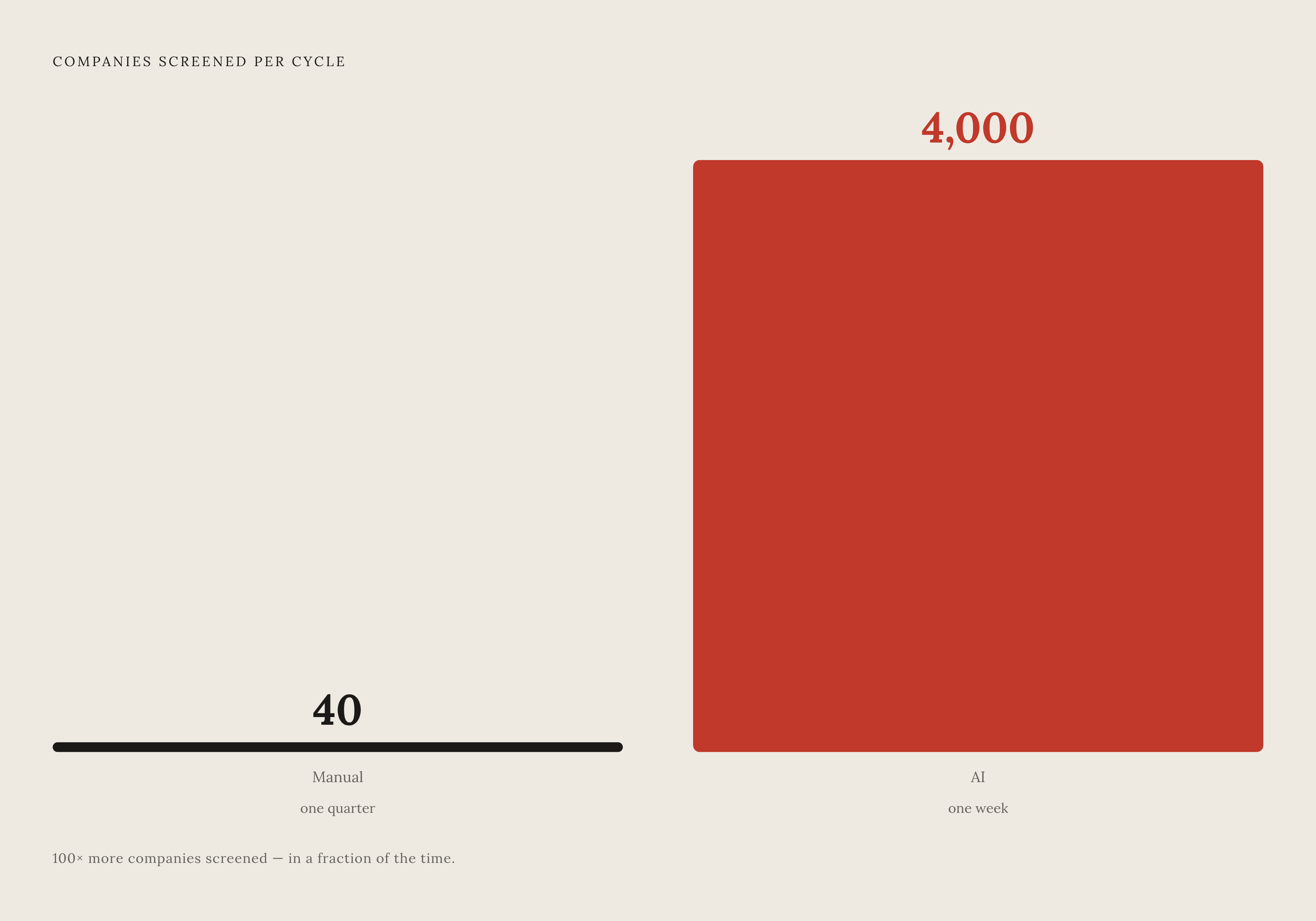
The more advanced versions pair a language model trained on a firm's own deal history with machine learning that clusters thousands of potential targets by business model, growth trajectory, and market adjacency. The output gap is stark: a system built this way can screen something on the order of 4,000 companies in a week, where a manual process run by an associate might get through 40 in a quarter. That's a difference in kind, not a modest bump in output, and it's the reason the word "AI" gets attached to so many pitches that have nothing to do with actual matching.
"AI in M&A" covers more ground than matching alone, and mixing up the categories is where most of the confusion starts. Four distinct use cases exist, and only one is the subject here. Intelligent origination is the algorithmic identification of who should buy or sell, and the connecting of those parties. Due diligence acceleration is a separate layer, where AI reviews contracts for anomalies or flags cybersecurity exposure. Deal modelling and scenario forecasting handle probability-weighted pricing of synergies and churn risk, and post-close integration monitoring tracks whether promised synergies actually appear once the deal closes.
Origination sits earliest in that chain, and it carries the most weight, since everything downstream depends on finding the right counterparty first. It's also the layer where genuine AI capability runs thinnest. Firms that talk up their AI due diligence tools often say nothing about how they found the buyer in the first place, and those are not the same claim. A pitch that quietly skips from due diligence straight to closing, without ever explaining how the buyer got on the list in the first place, deserves a harder look than most founders give it.
Where AI adoption in M&A workflows has spread and where the gaps remain
Adoption numbers, on their face, look enormous. Deloitte's M&A Generative AI Study found that roughly 86% of senior corporate and private equity deal leaders had already worked generative AI into their M&A process, with 65% of those doing it within the past year. That's a fast curve for an industry that has historically moved slowly on new tools.
What does that 86% actually consist of? A member survey run by Axial, a lower-middle-market deal network discussed further below, breaks the pattern down usefully. 80.6% of respondents use AI for market research, the most widely reported application in the survey. Close to 38% named overreliance or a loss of independent judgment as their biggest worry about AI in deal work, which says the people using these tools daily aren't naive about what the tools can't do.
When those numbers are put together, the picture sharpens fast: adoption is high, but it clusters around workflow acceleration, meaning document review, background research, and writing, rather than true algorithmic identification of buyers. That's the gap this piece keeps circling back to. The 86%, the 80.6%, the 38%, all of it describes people getting faster at tasks they already did by hand. None of it describes a machine finding a buyer nobody knew existed, and conflating the two is how a founder ends up overpaying for a tool that's really just a faster typist.
The platforms that provide genuine AI buyer-matching and how they work
A founder evaluating an advisor's AI claims should ask which category is actually on the table, because the technology that performs buyer-matching often lives on a platform that advisors use, not inside the advisory firm's own proprietary stack. That distinction gets blurred constantly, usually to the advisor's benefit, and rarely by accident.
Cyndx is one clear example of a platform built around this function. It uses AI and natural language processing to analyze data across millions of companies and past transactions, running tools that include Finder for market mapping and target discovery and Acquirer for identifying acquisition targets specifically. The Acquirer tool is built to return up to 100 potential targets in a single pass, against the 5 to 10 a general-purpose language model might spit out if asked directly. Cyndx also runs a "Projected to Raise" model meant to flag companies likely to need capital before they've said so publicly, which the platform reports as accurate roughly 86% of the time across sectors broadly, climbing closer to 100% in data-rich sectors like technology and healthcare where public signal runs denser. Cyndx partners with Dealsuite to combine on-market and off-market sourcing, and the platform is available to M&A professionals working the lower middle market.
Dealsuite itself operates across multiple countries and restricts platform access to vetted users. Its AI matchmaking connects buyers and sellers on a controlled basis, with deal characteristics used to identify counterparty fit. Dealsuite's documented user base is primarily European. Grant Thornton has adopted Dealsuite across its network, and Grant Thornton maintains a Canadian M&A advisory presence, but nothing in available material documents that adoption as Canada-specific. For a Canadian reader the honest description is accessible, European in origin, with confirmed Canadian use limited to that one reference point, a thinner claim than the marketing implies.
How Canadian M&A advisory firms position themselves on AI, and what that positioning reflects
PwC Canada operates a proprietary platform called Junction, built to let deal teams collaborate across the full deal lifecycle, from early analysis through planning, execution, and eventually valuation realization. PwC also publishes some of the more widely cited Canadian M&A market data. The AI positioning around Junction focuses on managing the deal process end to end, leaving the question of which buyer to approach to other tools. Easy to miss that distinction if the marketing copy is the only thing being read.
The Deloitte US 2025 M&A Generative AI Study behind the 86% adoption figure cited earlier, and the firm stays active in Canadian M&A advisory broadly. Available material doesn't document a proprietary AI buyer-matching tool at Deloitte distinct from the general workflow AI tools already discussed, and that gap in the record matters. It just means the evidence doesn't support a matching-specific claim, and firms rarely volunteer that distinction on their own initiative.
On the legal side, practitioners have observed that clients increasingly bring AI-assisted modelling and preliminary due diligence work to the table before lawyers even get involved, shifting legal time toward strategy and execution rather than document assembly. That's a genuine shift. Still AI in the workflow, though, not AI identifying who the buyer should be.
Large Canadian advisory firms are consistent on process efficiency and due diligence acceleration, and thin on origination, and that pattern is the whole point of this section. Genuine algorithmic buyer-matching stays concentrated in specialized platforms like Cyndx and Dealsuite rather than in the core offering of general advisory practice. One might argue that's just a sensible division of labor: platforms build matching engines, advisory firms build relationships and judgment. There's something to that argument. But it means a founder who hears "we use AI" from a large advisory brand owes it to themselves to ask a follow-up question rather than assume the phrase covers buyer discovery, because in most documented cases so far, it doesn't.
Boutique investment banks show a related but distinct pattern. AI tools let junior bankers manage meaningfully more live deals at once than they could unassisted, a real productivity gain that matters. But it mainly expands the advisor's capacity to run more processes in parallel. It doesn't, on its own, expand the universe of buyers available to any single seller, and that distinction shapes how the rest of this piece should be read.
What genuine AI-driven buyer-matching looks like for a founder-led Canadian business
Everything starts with the seller profile. Financials, sector tags, geography, growth signals, and a clear read on owner intent (full exit, partial sale, staying on post-close) all feed the matching algorithm, and thin or vague input produces thin or vague output. Garbage in, garbage out is a cliché precisely because it holds true in every system that depends on structured data, and matching engines are no exception here.
Done well, AI origination produces a few things manual outreach structurally cannot manage. Off-market buyer identification is the clearest one: strategic acquirers and financial sponsors who aren't running a formal process right now, but whose acquisition history, hiring patterns, and patent filings suggest a strong fit, surfaced from behavioral signal rather than from someone happening to know them. Ranked, scored buyer lists follow from that, replacing an undifferentiated longlist that treats every name as equally promising. Signals of seller readiness can also appear before a formal process launches, so buyers get warmed up ahead of time instead of cold-called the week an information memo goes out.
But how does this hold up against the real constraint in the Canadian lower middle market? Matching quality is only as good as the private-company data feeding the system, and that's a genuine limitation here, not a footnote. Canadian SMEs don't file public financials the way listed companies do. The data density that pushes Cyndx's sector accuracy toward 100% in technology and healthcare simply isn't there for a lot of founder-led businesses in less data-rich sectors like manufacturing or local services. That's a structural fact about the market these tools operate in, and it means a founder in a data-thin sector should expect a thinner buyer list.
So what should a founder actually ask an advisor who claims to offer AI buyer-matching? A short, direct set of questions works better than a vague reassurance. Which platform or algorithm produces the buyer list, specifically, and who enters the data that profiles the business? Is the resulting list scored and ranked by the algorithm, or is it a manually curated list that AI research tools merely helped assemble? And how many qualified Canadian buyers, specifically, does the system surface for this sector and this revenue range? That last question tends to separate real capability from a slide deck, mostly because it's the one advisors have the hardest time answering with a straight number.
Where the combination of AI matching and human advisory judgment adds value neither delivers alone
Platform-only matching has a ceiling. An algorithm can surface targets efficiently, but it can't negotiate an earn-out, structure a rep-and-warranty insurance policy, or navigate the emotional weight of a founder stepping away from a business built over decades. Fasken's Sean Stevens has pointed out that earn-outs, contingent consideration structures, and representation and warranty insurance are becoming standard tools precisely because they bridge valuation gaps that no amount of data matching resolves on its own. Those are negotiated instruments, built by people who understand both the numbers and the personalities in the room, and no clustering algorithm gets a seat at that table.
Traditional advisory without AI matching has the opposite problem. An advisor's network sets the outer boundary of the buyer universe, human bandwidth caps how many deals can get tracked at once, and off-market opportunities that never appear in anyone's contact list go unsurfaced. That's a structural limit of relationship-based origination, and no amount of hustle fixes a ceiling built into the method itself.
When the two are put together, each fixes what the other lacks. AI expands and scores the buyer universe before outreach even begins, doing in a week what used to take a quarter. Human bankers then validate genuine fit beyond what the data captures, manage the relationships that actually close deals, structure terms around the seller's real priorities, and protect value through to close. The 86% adoption figure from Deloitte's study reflects an industry that has broadly accepted this combination as where the value sits, even though most of that adoption today still lives in research and writing rather than true origination. For founder-led Canadian sellers specifically, the real frontier is closing that remaining gap: pushing the matching technology further upstream, into the moment before a process even begins, while keeping the human judgment no algorithm has learned to replace.