How AI Valuation Tools Compare to Traditional Business Appraisals
AI valuations offer speed but lack the defensibility traditional appraisals provide in disputes.
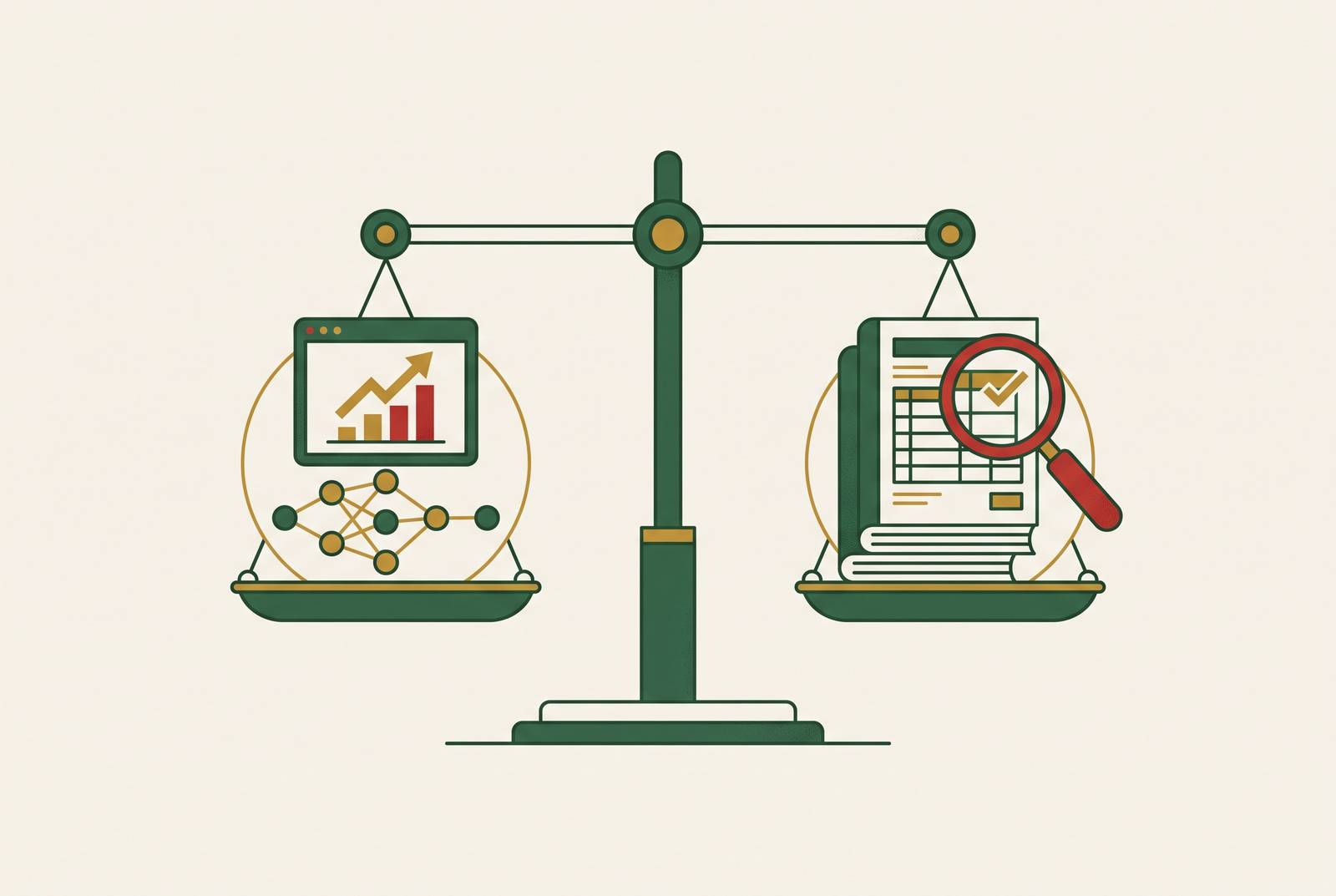
Global M&A activity hit a $2.6 trillion peak in 2025, up 28% year over year, and the tools business owners use to figure out what their company is worth have split into two camps that mostly ignore each other: AI platforms that spit out a number in minutes, and credentialed appraisers who take weeks to get there. Most owners treat this as a choice between speed and rigor. That framing is wrong, and it costs people money. The two tools answer different questions, and mistaking one for the other is where owners get hurt, usually right when the stakes are highest.
What a traditional business appraisal actually involves
A certified appraisal rests on three methods that have been around for decades: the asset-based approach (what the company owns minus what it owes), the market approach (pulling comparable transactions and multiples from similar sales), and the income approach (discounted cash flow and projections of future earnings). That doesn't require any complicated explanation. What makes the process slow is the standard it has to meet, not the arithmetic underneath it.
Appraisals governed by USPAP, specifically Standards 9 and 10, apply to business valuation work required for federally backed lending and for anything that might face IRS scrutiny. Credentials like a business valuation accreditation and a senior appraiser designation carry weight because the IRS and SEC recognize them, and that recognition is what matters once a valuation ends up in front of a judge or an auditor.
Take 409A valuations, the ones the IRS requires when a private company issues stock options. A qualified independent appraiser is the preferred safe-harbor method, not the only IRS-recognized one, but the one most companies lean on. A certified appraisal for this kind of work typically runs $7,500 to $15,000, though practitioner estimates range from $5,000 to $25,000 depending on complexity.
So why weeks instead of days? Not because appraisers move slowly by nature. A typical engagement arrives as a pile of scanned tax returns, QuickBooks CSV exports, printed RMA benchmark reports, and a BizComps comparable-transaction list missing half its deal-structure detail. Someone has to read all of it, reconcile it, and re-key it before any formula gets applied. For a straightforward valuation of a small manufacturing company, that data wrangling alone eats 8 to 12 hours. Software has handled DCF and comparables for years, so the math was already solved. Getting clean, structured data into that software is where the time actually goes, and neither humans nor machines have fully solved that problem.
Where traditional appraisals genuinely earn their cost
A USPAP-compliant report signed by a credentialed appraiser is what courts, lenders, the IRS, and an acquirer's legal team will accept. No AI-generated output currently substitutes for that signature in a contested or compliance-driven situation. That single fact is the whole reason the traditional process still exists. Anyone shopping purely on speed is optimizing for the wrong variable, and will find that out at the worst possible moment, usually mid-negotiation, when someone on the other side of the table asks who signed the report.
The value goes past the paperwork, too. Management effectiveness, local market relationships, pending legislation that might hit a specific industry, customer concentration risk, how well a business fits strategically with a potential buyer: none of that automates well, because it requires someone to sit with the business and interpret it. Firms with deep appraisal experience, such as The Benaglio Group with its over 30 years in the field, are precisely where local market knowledge and industry relationships come into play as context no algorithm captures. Algorithms aren't being knocked here. It's a description of what judgment looks like when it's earned rather than computed.
Done well, traditional methods can also fold in environmental, social, and strategic considerations that shape long-term value, though plenty of standard appraisals still underweight these. And when ownership structures get complicated, multiple classes of stock, cross-holdings, layered partnership interests, traditional appraisers handle that terrain better than most automated platforms. BizEquity, one of the leading AI valuation tools, is known to struggle with complex ownership structures, which is exactly the kind of situation where a human needs to untangle the cap table before any number means anything.
Estate planning, partnership disputes, ESOPs, M&A due diligence at scale: these are situations where the report will likely be challenged by someone with an incentive to poke holes in it. What the owner is really buying, in the end, is defensibility, and a professional who stands behind the number when someone pushes back. Both of those matter more, not less, as the deal size grows.
What AI valuation tools can do that traditional appraisals cannot
Speed is the obvious one. BizEquity can produce an initial valuation in about ten minutes, against weeks for a traditional appraisal. Business valuation doesn't have benchmarks that clean or consistently reported yet, so treat any precise speed comparison for business AVMs with suspicion; the industry hasn't earned that kind of number yet.
Where AI genuinely pulls ahead is breadth. These platforms can chew through a large number of market factors at once, demographics, comparable deal data, hiring trends, digital engagement, correlating patterns across markets that would take a human analyst weeks to assemble by hand. They're also picking up signals traditional models never looked at in the first place: subscription growth, app usage trends, foot traffic. According to one industry estimate, 68% of investors expect to prioritize digital traction and innovation metrics when they evaluate a company going forward. That amounts to a significant shift. It means the inputs themselves are changing.
For tech and IP-heavy businesses, AI tools can scan patent databases, track market adoption rates, and map competitive positioning simultaneously, surfacing value that traditional methods routinely leave on the table. On the buyer side, due diligence supported by one model reportedly cuts the process by up to 70%, scraping public reviews, Glassdoor comments, and competitor pricing shifts to build a real-time picture of reputation and market share.
There's a bias argument here too, and it's underrated. Comparable selection and narrative framing are places where human judgment drifts, consciously or not, and AI measurably reduces that drift even if it doesn't erase it. Unlike a traditional appraisal, frozen at a single moment, an AI-powered platform can track value continuously as market conditions shift. For an owner watching an exit window over several years rather than deciding tomorrow, that continuous read matters more than any one-time snapshot.
Where AI valuation tools fall short in practice
Start with the accuracy claims, because they deserve scrutiny, not repetition. A figure circulating widely puts AI M&A prediction accuracy at 94% to 97%, against 78% for human appraisers. That number traces back to a marketing-forward blog post, and the underlying Journal of Corporate Finance article it cites could not be independently confirmed. Until that research is actually verifiable, the number doesn't hold up to a basic citation check, and it shouldn't be repeated as if it does.
The data problem cuts deeper than most people expect. AI tools are only as good as what gets fed into them, and the exact same mess that slows down traditional appraisers, scanned PDFs, inconsistent spreadsheet formats, missing line items, corrupts an AI-generated valuation just as badly. A human appraiser usually notices when something looks off. An algorithm doesn't flag the problem at all; it just produces a confident-looking number regardless of what's underneath it. That confidence is the actual danger. A wrong number that looks uncertain gets checked. A wrong number that looks precise gets trusted.
Intangible assets cut both ways here. Traditional appraisals are known for undercounting intangibles, but AI tools trained on historical transaction data mis-price them just as easily, particularly for businesses where the real competitive edge lives in relationships, tacit knowledge, or a proprietary process that never shows up cleanly in a dataset. None of this carries legal weight on the regulatory side, either. AI-generated valuations are not accepted by the IRS, courts, or lenders as USPAP-compliant reports. Wherever a defensible number is required, the AI output is a starting point and nothing more, not something to hand across the closing table.
Complex ownership structures remain a known weak spot. BizEquity, despite holding roughly 18% of the market, struggles once ownership structures get complicated, the same limitation flagged above. The enterprise AI platforms aren't the frictionless alternative smaller owners might assume, either: annual licensing runs anywhere from $100,000 to over $500,000, with implementation cycles stretching 6 to 18 months. That's its own kind of overhead, just moved to a different line item on the budget.
Sit with the black-box problem for a second, because it's the one that actually blocks adoption in regulated settings. USPAP compliance demands documented, auditable methodology, a clear paper trail showing how a number was reached. AI models that can't explain their internal weighting logic create real compliance risk for any credentialed appraiser tempted to lean on them. Buyers are increasingly scrutinizing whether a target's AI adoption is superficial, bolting on some off-the-shelf tool, or genuinely embedded in how the business runs. That distinction takes human judgment to call. No automated valuation model reliably makes that call on its own, and none looks close to making it soon.
How AI is changing what gets valued, not just how fast it gets valued
Intangible assets now make up more than 80% of market capitalization across many advanced economies, according to research cited in the Intangible Capital journal. The classic valuation toolkit, DCF, comparable company analysis, precedent transactions, remains built around tangible metrics and backward-looking financials. That gap is not shrinking. It's arguably the more consequential story in this entire piece: the tools everyone argues about, AI versus appraiser, are both still catching up to what businesses have actually become.
EisnerAmper's September 2025 analysis offers a concrete illustration. A regional distribution company that rolled out AI-driven demand forecasting moved from roughly a 7x to a 9x EBITDA multiple, once it could show measurable gains in inventory turnover and the resulting bump in EBITDA. Same business, same balance sheet in most respects, but a different story attached to it, and a materially different multiple as a result.
The risk runs the other direction too. A marketing agency built heavily around copywriting and design services saw buyers push for a lower multiple, specifically citing AI tools capable of replicating that core service. AI adoption, or the conspicuous lack of it, has become a valuation input in its own right, not just a tool used to calculate one. Per EisnerAmper, tech and SaaS firms embedding AI meaningfully into their operations are reportedly seeing valuation uplifts of 40% to 100% compared to non-AI peers, though buyers move fast to check whether that adoption is real or cosmetic.
Neither an AI platform nor a traditional appraiser walks in and surfaces this dynamic unprompted. That's on the owner. If AI is part of the value story, someone has to document it with real metrics before either valuation approach can reflect it accurately. Skipping that step is probably the single most common way owners leave money on the table, and it's an entirely avoidable one.
A practical map of when to use each approach, and when to use both
AI tools make the most sense for early-stage exploration: getting a ballpark figure fast, before committing time or money to a formal process. They're well suited to ongoing monitoring too, tracking value as an owner plans an exit two or three years out, and to buyer-side screening, where a firm needs to size up a list of acquisition targets quickly before greenlighting full due diligence on any one of them. They're also the better tool for catching non-financial signals, subscription trends, digital engagement, shifts in market sentiment, areas beyond the scope of traditional appraisals.
Traditional appraisals stay necessary wherever a transaction needs a defensible, USPAP-compliant report: lending, tax filings, legal proceedings, M&A closings. They're the right call for complex ownership structures, partnership disputes, estate planning, and ESOPs, or anywhere a number might face IRS, SEC, or FINRA scrutiny down the road. And they remain the better fit for businesses where the real competitive edge sits in relationships or tacit knowledge that no algorithm currently parses. Full stop, no asterisk.
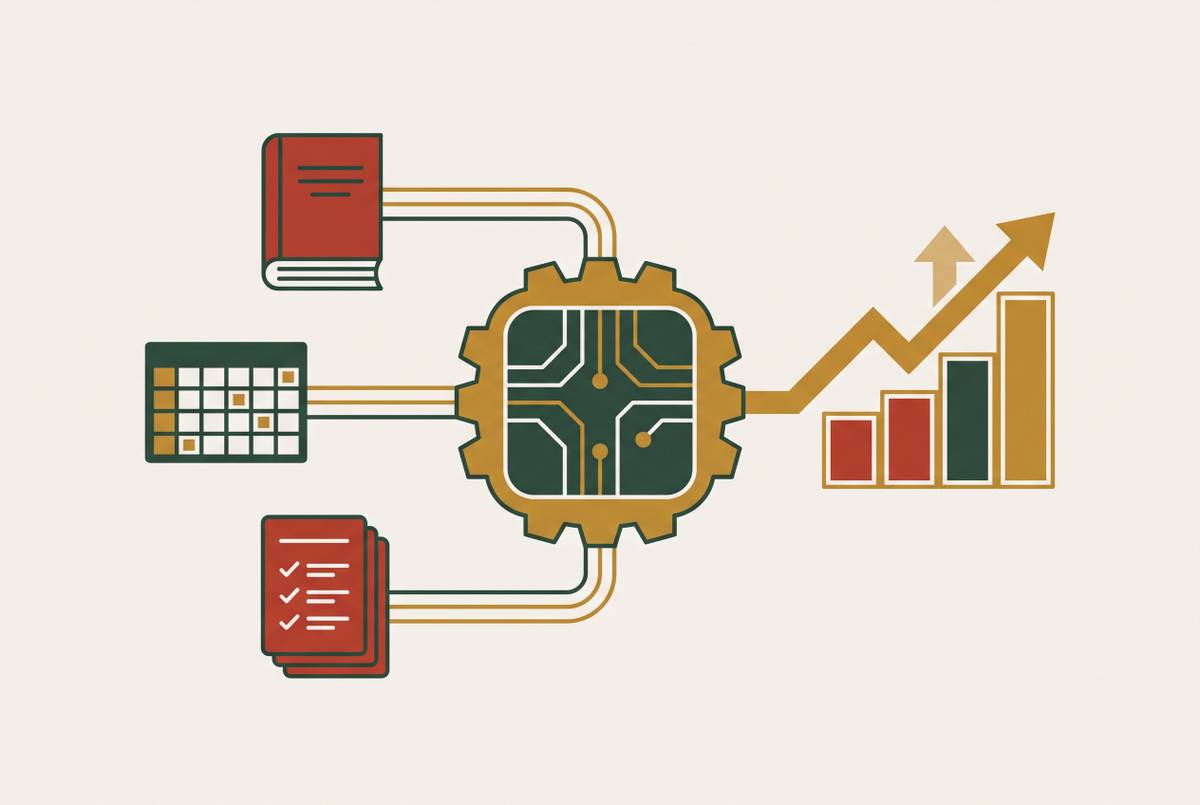
What's actually emerging, and this is already the direction enterprise valuation platforms are heading, is a hybrid workflow rather than a winner-take-all outcome. AI handles data ingestion and the first pass at screening; credentialed appraisers apply judgment, document methodology, and sign the final report. AI document processing is already automating the preprocessing step, pulling structured data out of CIMs and financial statements before a human analyst opens the file. For a founder-led business in the small-to-mid-market range, the practical question isn't which tool to pick, but where each one belongs in the sequence: AI-driven benchmarking first, to understand the likely range and spot what's actually driving value, then professional advisory to package and defend that number once a real buyer sits down at the table. Investment banking advisory paired with AI-powered screening, a model that enterprise valuation platforms are increasingly exploring, reflects exactly this logic: speed and market breadth from the machine, credibility and negotiation from the human.
What business owners should do before choosing a valuation approach
Figure out the purpose first. A valuation done for personal planning is a different animal from one built for a live deal, and the use case determines which approach fits and how defensible the number needs to be.
Before any tool touches the financials, take stock of what actually drives the company's value. If the edge comes from AI integration, proprietary data, or real operational efficiency gains, document it with concrete numbers, because buyers will check whether that advantage is genuine or surface-level. Neither an AI platform nor a traditional appraiser builds that narrative on the owner's behalf.
Be honest, too, about what the financial statements leave out. If intangibles, customer relationships, brand equity, embedded process knowledge, make up a meaningful share of the company's worth, flag it early. Both AI tools and traditional models carry structural blind spots here, and pretending otherwise doesn't close the gap.
One habit is worth building regardless of which tool gets used: ask any AI platform where its comparable data actually comes from, and how recent it is. A tool benchmarking a business against transactions from three years back spits out a number that looks entirely plausible while quietly missing what the current market is doing, and there's no warning label on the output telling anyone it's stale.
For an owner two or three years from exit, the AI monitoring use case earns its keep: track value over time, see which operational changes actually move the multiple, and walk into a formal process later with a documented story instead of a cold start. But when a real transaction lands on the table, the AI output marks the beginning of the conversation, not the end of it. A credentialed advisor, backed by a defensible process, is what protects the number an owner spent years building toward, and no platform, however fast, is built to do that part.
Sources
- How AI Is Shaping the Valuation of Private Companies
- Best Business Valuation Software for Appraisers [2025 Guide]
- AI Business Valuation Model 2026: Methods, Metrics & Trends for Founders | FE International
- growthfactor.ai
- How AI Tools Are Changing the Way Buyers Evaluate Businesses - Website Closers
- thevalleybusinessbroker.com
- wepitched.com
- lucid.now