What Happens When the Business Is Also the Family's Financial Safety Net
Most owners treat their company as retirement fund, emergency fund, and net worth all at once.

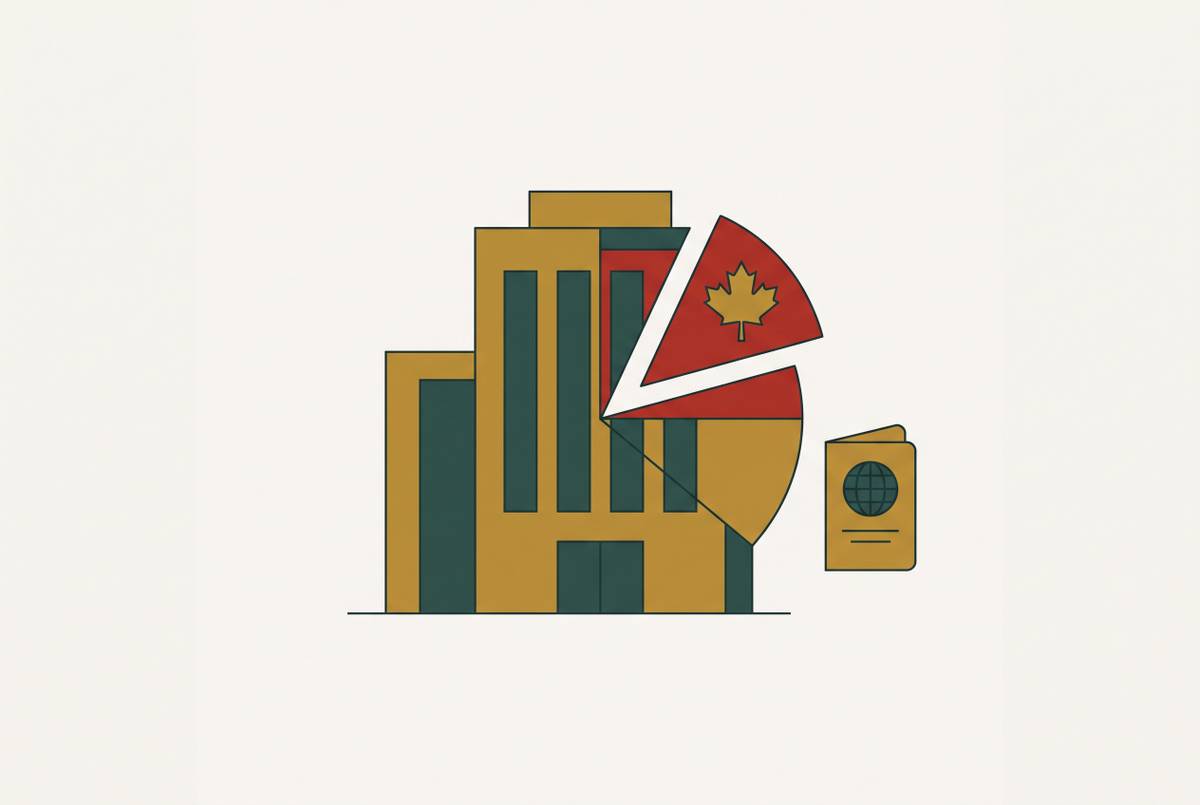
Most owners, when asked what their retirement plan is, give the honest answer that it is the business itself. The business, full stop. That's not a guess or a hunch about owner psychology: it's the documented reality for most business owners, whose personal wealth sits overwhelmingly concentrated in the company they built, according to the National State of Owner Readiness Report from the Exit Planning Institute. The business is the income source, yes, but it's also functioning as the retirement fund, the emergency cushion, and the net worth statement, all at once, inside a single legal entity.
This didn't happen because anyone was careless. It happened because it's what building a company actually looks like from the inside. Profits get reinvested instead of pulled out. Outside savings get delayed another year, then another, because the business needs the capital more than a brokerage account does. Identity fuses with the enterprise until the two are difficult to separate even in conversation. None of that is a character flaw. It's the predictable byproduct of building something that works, and owners reading this shouldn't feel accused. The article that follows is describing a structural condition, not a mistake.
The result, though, is a household balance sheet that looks unlike almost anything a financial planner would draw up from scratch. No walls between them. No separation of function. And that's the condition every section that follows is going to examine from a different angle.
Why concentration in a single asset multiplies risk at the household level
When one asset holds income, net worth, and exit value simultaneously, a single shock doesn't hit one part of a family's finances. It hits all of them, at the same moment, with no buffer in between. A diversified household absorbs a bad quarter in one holding because the rest of the portfolio keeps moving. A business-owning household doesn't have that luxury, because there is no "rest of the portfolio." There's the business, and then there's whatever's left.
That's illiquidity playing out in practice. Substantial net worth does not equal accessible money, and business ownership interests, along with business real estate, are about as illiquid as personal assets get. Most owners haven't built that reserve because surplus cash gets routed back into the business almost by reflex.
And the shocks that test this arrangement aren't hypothetical. A second-generation retailer undone by a sudden rent hike it never budgeted for. A restaurant group, built patiently over decades, unwound by rising costs and a supply chain that stopped cooperating. What connects these stories is something broader than the specific disaster. It's the absence of any financial buffer sitting outside the business when the disaster arrived.
There's a legal layer to this too, one that gets less attention than it deserves. When an owner doesn't maintain clean separation between business and personal finances, personal assets become reachable to satisfy business debts if the business gets sued and the two sets of books are indistinguishable. That's not a rare edge case dreamed up by cautious lawyers. Per the PwC US Family Business Survey, economic volatility, inflation and supply chain disruption among the drivers, impacted a large share of US family business respondents within the past year, with geopolitical risk close behind. These are recurring conditions now, not rare occurrences. They're recurring conditions that any owner operating today has to plan around, not just react to when they arrive.
The awareness-action gap that keeps most owners exposed
So owners know this. Most of them, anyway. A large majority of respondents in the PNC Business Owner Wealth Insights survey said they specifically value financial advice that treats business and personal needs as one integrated picture. And yet only roughly half currently work with an advisor who actually does that. Awareness, in other words, is not the bottleneck. Something else is stopping the knowledge from turning into a plan.
Part of it is structural, and here's where the seams show. Business advisors tend to focus on the company: growth, operations, valuation. Personal financial advisors, meanwhile, often treat the owner's equity stake as a black box, something to note on a net worth statement and move past rather than actively manage. Neither side is doing anything wrong. But owners fall through the gap between these two advisory worlds, because integrated planning that actually spans both sides is harder to find than either kind of advice on its own.
Part of it is emotional, and this deserves to be said without judgment. The business is experienced by its owner as a life's work, not as a concentrated risk position sitting on a balance sheet. It's experienced as a life's work. That framing makes it genuinely difficult to plan around the business failing, or even around the business someday being sold, because doing so can feel like planning for a kind of loss that has nothing to do with money. Research on family business dynamics backs this up directly: the emotional nature of family enterprises can run counter to financial objectives, and performance suffers as a result. The blurring of personal and business boundaries reflects a structural feature of how family firms operate. It is a distinctive structural feature of how family firms operate, and it raises risk in balance sheets whether or not anyone intended it to.
And part of the resistance is just practical, maybe the most defensible part. Total diversification isn't realistic for someone actively running a company. Pulling capital out to invest elsewhere can weaken the very asset generating the return in the first place, which is a real tension, not an excuse to be waved away. But framing the choice as "liquidate and diversify" versus "stay concentrated" misses the actual question owners need to be asking. The better question is what can be built outside the business while it keeps running, which is exactly where the next section turns.
What the liquid portfolio is supposed to do when the business dominates the balance sheet
Once the business is already carrying substantial balance-sheet risk, the liquid portfolio sitting next to it has one job: offset that risk, not echo it back. That reframes the whole exercise. But that questionnaire is answering the wrong question, because it's evaluating the liquid portfolio in isolation instead of reading it against a balance sheet that's already dominated by one illiquid, concentrated, industry-specific asset.
Integrated planning changes what gets asked. Instead of "how do you feel about market volatility," the real question becomes "how much risk is already sitting on the balance sheet through the business," and the honest answer almost always points toward a more defensive personal portfolio than the owner would otherwise choose. An owner who takes personal savings and funnels them into sector funds tied to their own industry is doubling down on a single bet. They're doubling a bet they've already made once, at a much larger scale, through the business itself.
It's a vehicle explicitly built to hold assets with zero correlation to the business, funded consistently, structured so the owner isn't tempted to reroute the contribution back into company operations during a tight quarter. The point is that this single account is one deliberate brick toward solving the problem of concentrated holdings. It's that it represents the first deliberate brick in something separate from the business, and that separateness is the entire objective.
One dissenting view deserves a mention here, because it's real and shouldn't be dismissed. Selling a minority stake, or diversifying too aggressively too early, can erode the control premium that makes the business valuable in the first place. That tension, between protecting the family's financial position and protecting the asset's actual worth, doesn't resolve neatly for most active owner-operators. It's structural, and it stays that way.
Why succession planning is the safety net's single point of failure
Everything discussed so far, the concentration, the illiquidity, the sector doubling, converges on a single decision point: who runs the business next. That choice decides whether the family's income, net worth, and eventual exit value survive the founder's departure intact, or collapse right alongside it. Succession planning carries the weight of the entire plan, not a single item on a longer checklist. It's the moment where every other form of risk either gets absorbed or gets triggered all at once.
And the gap between knowing this and acting on it is wide. A survey of US family-business executives conducted by PICPA and Deloitte found that a large majority called succession planning essential to long-term success. Yet fewer than two-thirds had an actual CEO succession plan in place, and fewer than a quarter said such a plan was actively being implemented rather than sitting in a drawer. The UBS Global Family Office Report 2025, surveying 317 family offices globally, found that only roughly half have a formal succession plan at all, and more than a third don't involve the next generation in planning in any capacity.
This problem doesn't shrink as the family gets wealthier. The Citibank 2025 Global Family Office Report identifies a clear disconnect between asset growth and organizational resilience, with a substantial succession planning gap persisting even at the wealthiest tier of family offices surveyed. That suggests the problem scales with complexity rather than disappearing once a business crosses some threshold of size or sophistication.
The consequence isn't abstract. Of the businesses listed for sale in a given year, only roughly a third ever find a buyer. For a family whose retirement literally is the business, a failed sale is a household financial crisis unfolding in real time. It's a failed retirement, arriving at the exact moment the family can least afford one. Per Harvard Business Review, a large majority of family businesses don't survive to the second generation, and an even larger majority have closed or changed hands entirely by the third. A Chase survey found that nearly half of small business owners plan to retire within the next decade, yet only a small share report having a fully developed succession plan ready to execute.
How the 2025 estate tax change reshapes the timing of ownership transfer decisions
Then the ground shifted. The One Big Beautiful Bill Act, signed into law on July 4, 2025, permanently set the federal estate and gift tax exemption at a significantly higher level per individual, double that for married couples, with inflation indexing beginning in 2027 using 2025 as the base year. That single change removed the deadline pressure that had defined exit conversations under the prior tax law's scheduled sunset, and it gives families genuinely more room to structure ownership transfers on their own terms rather than racing a calendar.
That's appreciable, and also something to be careful about. More time to plan is not the same thing as a plan. The forcing function that pushed owners toward decisions, even rushed ones, has eased. But "more time" has a way of quietly becoming "indefinite deferral," which just recreates the succession gap discussed above through a different mechanism. The exemption doesn't plan anything on its own. It only changes how much runway exists before a plan becomes urgent again.
The same legislation, per Wiss Wealth Management's analysis of its effects, creates both new challenges and new openings for family businesses through the way it touches capital investment decisions, ownership structures, and cash flow planning. Nearly one in five US family businesses report that tax-related challenges have affected their operations within the past year, a reminder that policy changes ripple through a company's finances well beyond the estate planning conversation. And the highest-risk window for wealth erosion still sits in the period right after any liquidity event: decisions made in year one can shape the trajectory of a family's wealth for a generation. The new exemption level doesn't remove the need for a plan. It changes the timeline the plan has to work within, and the structure that plan should probably take.
What thinking clearly about exit requires
Separating the business from the family's safety net was never going to happen in a single transaction, a single signature, a single good year. It's a sequence of decisions, most of them made years before any exit is on the table, and they need to run in parallel rather than one after another: liquidity built outside the business, succession readiness inside it, and an exit strategy that reflects what the market will actually pay, not what the owner assumes it's worth.
Liquidity comes first, structurally speaking, because without several months of reserves genuinely independent of the business's cash flow, every operational setback turns into a household emergency by default. The succession layer isn't optional either, and it doesn't require selling anything. A business that can't transfer cleanly to a buyer, a successor, or a family member on the owner's own terms is a liability wearing an asset's clothing. It's a liability with a cost that's simply been deferred to a later, less convenient date.
The exit layer asks something more specific: what is the business actually worth to a buyer, who are the buyers that exist in the market right now, and what timeline gives the owner real leverage rather than a forced hand. A large number of businesses, representing trillions in aggregate value, are expected to change hands over the next decade, and the owners who enter that market prepared tend to land better outcomes than those who wait for a health scare or a market shift to force the decision. Matching technology paired with experienced investment banking advisory can close the distance between what an owner believes the business is worth and what buyers are actually willing to pay, the kind of coordinated support that's historically been hardest to find for founders running lower middle market companies without a large internal team behind them.
The Citibank report's finding, that meaningful governance and succession gaps persist even among the wealthiest family offices surveyed, makes a point that money alone won't resolve. It takes structure, some form of external accountability, and a plan that starts earlier than most owners are inclined to start one. Per the PwC US Family Business Survey, succession planning has already affected a meaningfully larger share of US family firms in the past year than their counterparts elsewhere in the world. The conversation, in other words, is already happening. The only open question is whether any individual owner is part of it, or still waiting for a better moment that a business, by its nature, rarely offers on schedule.
Sources
- US Family Business Survey 2025
- Inside the UBS 2025 family office report: Key takeaways
- Family business succession planning and the next generation, 2026 | Deloitte Global
- Amid growing risk and complexity, family businesses show they’re built to last - Family Business Magazine
- Business Owners Reflect on Balancing Business and Personal Finance in PNC Survey | PNC Insights